Postman vs Insomnia vs Thunder Client: Which API Client? (2026)
Written by Kajal · Reviewed and published by Prasandeep
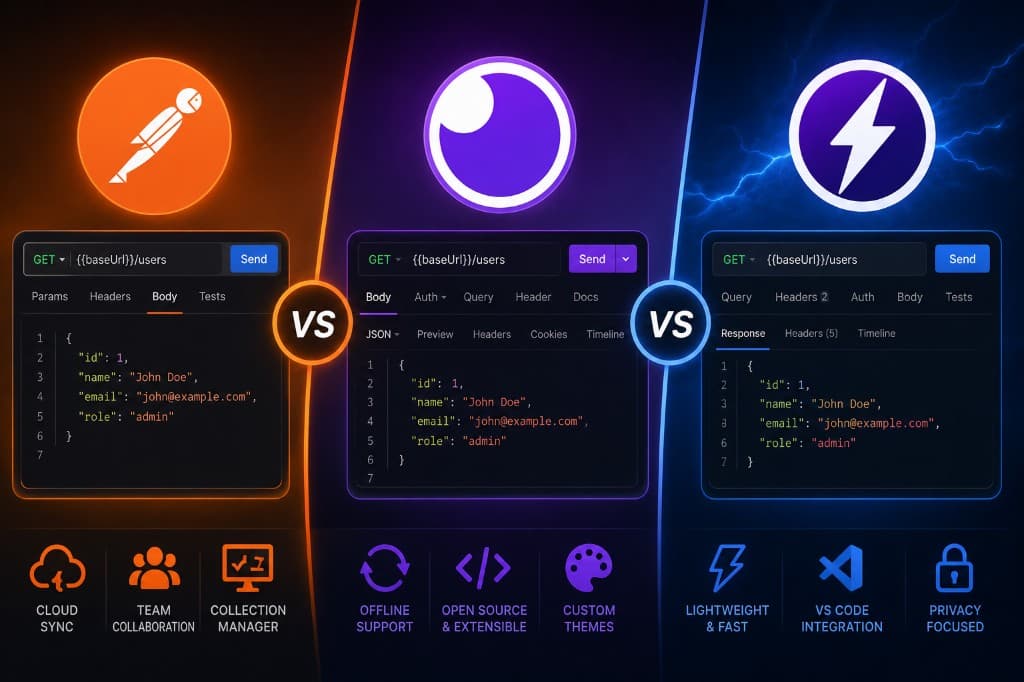
API development is central to modern delivery, and the client you use for sending requests, inspecting responses, and organizing environments shapes daily speed and team consistency. Postman, Insomnia, and Thunder Client are three of the most common choices—but they optimize for different workflows: platform breadth, standalone simplicity, and in-editor convenience.
This comparison is technical and practical: what each tool does under the hood in a typical SDET/backend workflow, where they differ on automation and collaboration, and how to pick one without defaulting to “whatever the team already has.”
For API automation in code, see REST Assured Complete Tutorial (Java) and API Contract Testing with Pact.js. For GraphQL-specific testing, see GraphQL Testing with Apollo + Playwright. For load beyond manual calls, see k6 vs Artillery.
Pricing and limits change. Verify current plans on each vendor site before team rollout.
What API clients do in the stack
An API client is not a replacement for automated tests in CI—it is the fast feedback layer between writing code and running suites:
- Craft HTTP requests (method, headers, body, auth)
- Inspect status, headers, timing, and JSON/XML bodies
- Manage environments (
{{baseUrl}}, tokens, secrets) - Organize collections of related calls
- Run scripts (pre-request, tests on response) for light automation
- Import OpenAPI / GraphQL introspection to bootstrap requests
| Tool | Positioning |
|---|---|
| Postman | Full API platform—collections, mocks, docs, monitors, team workspaces |
| Insomnia | Focused standalone client—strong REST/GraphQL, less platform overhead |
| Thunder Client | VS Code extension—minimal context switch for editor-native devs |
Quick overview
- Postman — most feature-rich and team-oriented
- Insomnia — most elegant traditional desktop client for daily debugging
- Thunder Client — best when you live in VS Code and want speed over breadth
The real choice depends on collaboration, automation depth, GraphQL usage, and tolerance for UI complexity.
Postman: platform depth
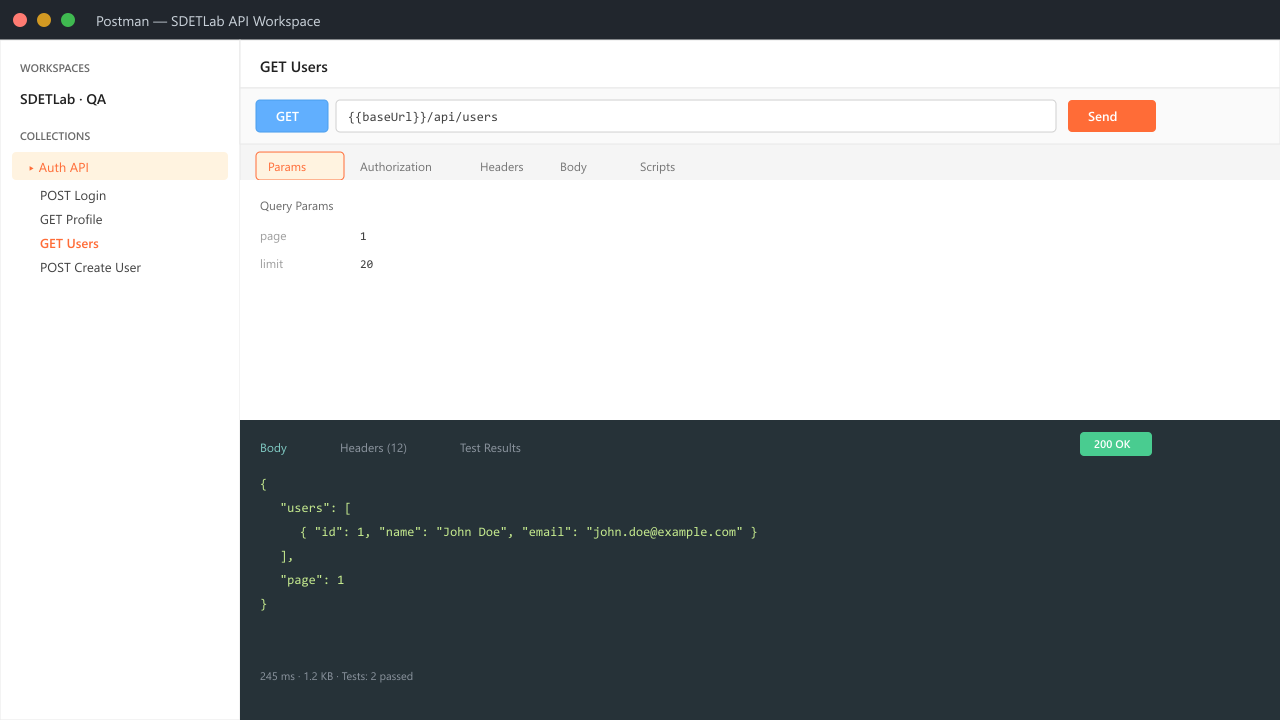
Postman targets teams that need more than ad hoc requests.
Strengths
- Collections with folders, versioning, and shared workspaces
- Environments and collection/global variables with
{{name}}substitution - Test scripts (Chai assertions in sandbox) and collection runners
- Mock servers and published API documentation
- Monitors and scheduled runs for synthetic checks
- Familiar to QA, backend, and platform engineers—common interview and org standard
Trade-offs
- Heavier CPU/memory and busier UI as features accumulate
- Advanced collaboration and enterprise features often sit behind paid tiers
- Easy to over-invest in Postman-specific artifacts if CI truth lives elsewhere (Playwright, REST Assured, Pact)
Technical fit: platform teams standardizing API discovery, docs, and smoke monitors; QA needing shareable collections before automation lands in repo.
Insomnia: focused standalone client
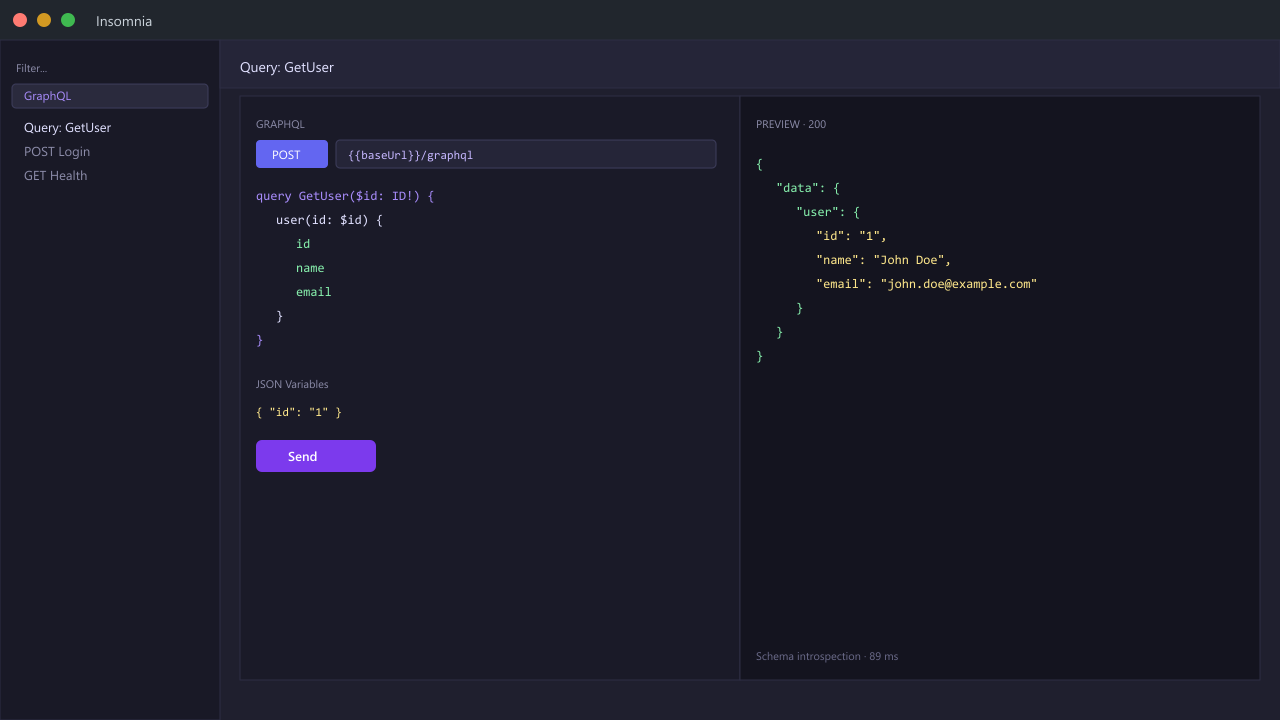
Insomnia optimizes for developer comfort on REST and GraphQL without a full platform mandate.
Strengths
- Clean UI, fast navigation between requests and environments
- Strong GraphQL support (schema introspection, query editor)
- gRPC, WebSocket, and design/import flows in many setups
- Less clutter than Postman for “send request, read JSON, iterate”
- Solid plugin and design-doc orientation for smaller teams
Trade-offs
- Team/collaboration and mock/doc depth lighter than Postman
- Automation and scheduled execution less mature than Postman’s ecosystem
- Still a separate app—context switch if you are otherwise VS Code–only
Technical fit: backend engineers debugging services daily; teams wanting GraphQL-first ergonomics without Postman’s surface area.
Thunder Client: VS Code–native
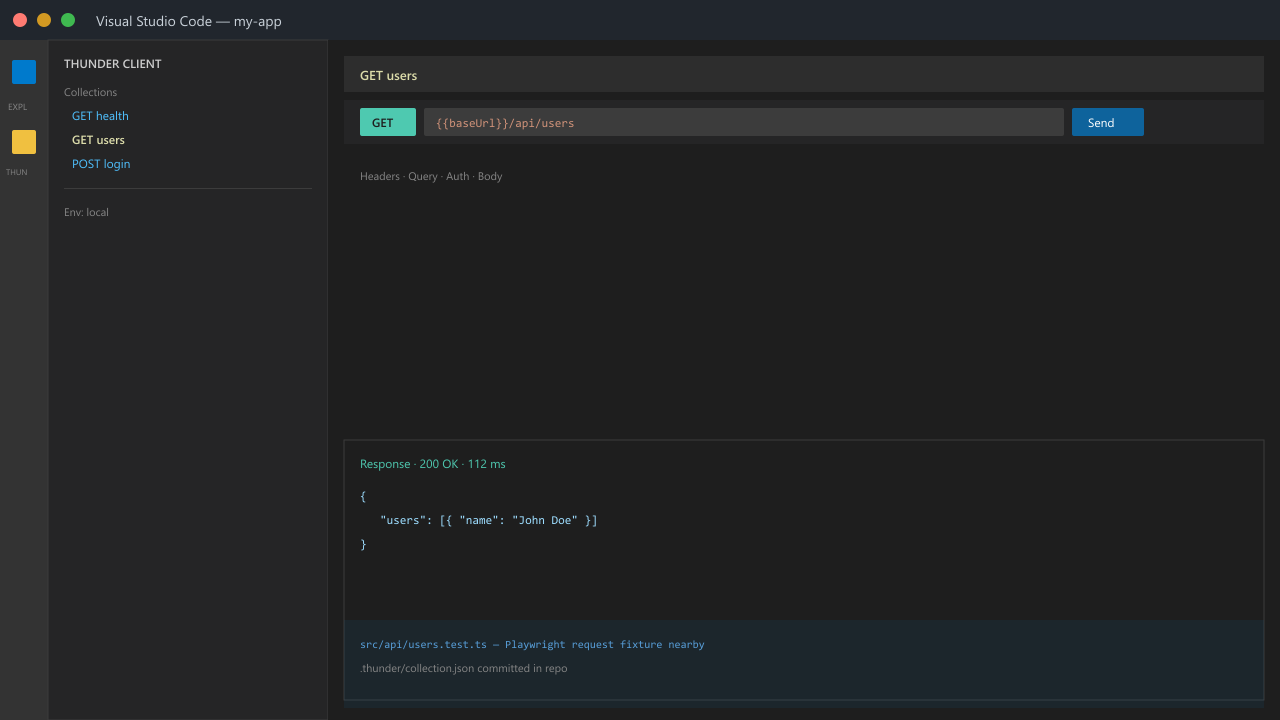
Thunder Client runs as a VS Code extension—requests live beside your repo.
Strengths
- Zero app switch for full-stack and frontend devs
- Lightweight: collections stored in workspace (often
.thunderor similar) - Environments, variables, and basic tests in-editor
- Fast onboarding if you already know VS Code shortcuts and Git layout
Trade-offs
- Not a standalone platform—no rich mock server / doc portal story
- Collaboration is file-based (share via Git) rather than workspace SaaS
- Test scripting and runner features narrower than Postman
- Tied to VS Code adoption on the team
Technical fit: solo devs, PR-local API checks, frontend devs validating BFF endpoints next to React/Vue code.
Feature comparison
| Feature | Postman | Insomnia | Thunder Client |
|---|---|---|---|
| Deployment | Desktop / web | Desktop | VS Code extension |
| REST | Strong | Strong | Strong |
| GraphQL | Strong | Strong | Good |
| gRPC / WebSocket | Supported (varies by plan/version) | Supported | Limited |
| Collection runner | Advanced | Moderate | Basic |
| Test scripts | Chai in sandbox | Plugin/script support | Lightweight tests |
| Team workspaces | Strong | Moderate | Git-shared files |
| Mock servers | Yes | Limited | No |
| Published docs | Strong | Moderate | No |
| OpenAPI import | Yes | Yes | Yes |
| CI export (CLI/Newman-like) | Newman, Postman CLI | Insomnia CLI | Typically manual / limited |
| Resource use | Heavy | Light | Very light |
User experience and workflow
Postman — powerful but dense; learning collections, environments, scripts, and workspace permissions takes time. Pays off when the org standardizes on it.
Insomnia — calmer UI; faster path from install to first useful request. Less “platform navigation,” more request debugging.
Thunder Client — lowest friction if VS Code is already home. Tradeoff: fewer second-pane features (monitors, mock portals).
Collaboration and team workflows
- Postman — shared workspaces, roles, comments, fork/sync collections; best when API assets must be discoverable by non-repo users
- Insomnia — cloud sync and team features exist; often chosen for individual productivity first
- Thunder Client — collections as repo files; review in PRs; aligns with “API definitions live in Git” cultures
If QA and devs must share the same collection without cloning the repo, Postman usually wins. If collections are versioned with code, Thunder Client or Insomnia + Git can be enough.
Automation and CI boundaries
| Need | Postman | Insomnia | Thunder Client |
|---|---|---|---|
| Response assertions in client | Test scripts | Supported | Basic |
| Collection run in CI | Newman / Postman CLI | Insomnia CLI | Rarely primary |
| Contract / schema gates | Often paired with Pact/OpenAPI elsewhere | Same | Same |
| Load testing | Export to k6/Artillery or separate | Same | Same |
Treat client automation as dev-loop validation. Source of truth for regression should remain Playwright request, REST Assured, or contract tests—not only a GUI export.
Performance and resource usage
Postman’s Electron footprint and background services can matter on constrained laptops. Insomnia is generally snappier for daily open-all-day use. Thunder Client adds modest overhead to VS Code but avoids a second heavy desktop process.
For “keep one tool open while running Docker, IDE, and browser,” Insomnia or Thunder Client often feel leaner.
Learning curve
- Postman — steepest (platform concepts: workspaces, monitors, mocks)
- Insomnia — moderate; core REST/GraphQL path is short
- Thunder Client — lowest if VS Code is already muscle memory
Decision framework
- Postman — Team needs shared workspaces, mocks, docs, monitors, and collection-based CI smoke
- Insomnia — Standalone client for REST/GraphQL with minimal clutter and strong daily ergonomics
- Thunder Client — VS Code–centric workflow; lightweight checks beside application code
Examples
- Backend platform maintaining shared smoke collections + published docs → Postman
- Solo service owner debugging GraphQL resolvers daily → Insomnia
- Frontend dev hitting BFF routes between component work → Thunder Client
Pricing and value (high level)
Postman gates some team/enterprise capabilities on paid plans—reasonable for orgs, heavy for hobbyists. Insomnia historically offered strong individual free tiers. Thunder Client uses a freemium extension model—value is convenience, not maximum feature count.
Confirm current pricing before standardizing a department on one vendor.
Common pitfalls
- Using GUI collections as the only regression layer — duplicate critical paths in CI code
- Secrets in shared collections — use environment files excluded from Git or secret managers
- Postman complexity without training — collections rot when only one person understands folders/scripts
- Thunder Client without repo discipline — collections not committed → lost on machine swap
- Ignoring GraphQL differences — verify introspection and variables work in your chosen client before team rollout
Conclusion
There is no universal winner:
- Postman — most powerful platform; default for large teams needing collaboration and API lifecycle tooling
- Insomnia — best balance of polish and power in a standalone app
- Thunder Client — best editor-integrated experience for speed and minimal friction
For most organizations, Postman remains the safe shared standard. For many solo or small-team developers, Insomnia is the pleasant daily driver. For VS Code–first workflows, Thunder Client removes the most context switching.
Pick based on where collections should live (SaaS vs Git), how much automation belongs in CI code, and whether GraphQL is first-class in your day-to-day path—then align the client to that architecture.